Torn Meniscus Doctor in Westchester County, NY

Knee pain can interfere with your ability to stay active and enjoy life. One common cause of knee pain is a torn meniscus, which occurs when the cartilage in your knee joint becomes damaged. Whether the injury results from sports, an awkward twist, or gradual wear over time, seeking an accurate diagnosis and expert care is key to your recovery.
Our team of board-certified orthopaedic surgeons at Specialty Orthopaedics specializes in meniscus tears and other knee conditions. Serving patients throughout Harrison and Westchester County, New York, our practice combines years of clinical experience with advanced surgical technologies. We believe in starting with conservative treatments whenever possible to restore mobility and relieve pain.
What Is a Meniscus Tear?
A meniscus, which is the piece of cartilage that absorbs shock and protects the end of each of your leg bones, can tear when it is twisted incorrectly, when the joint is hyperextended, or when age causes degenerative damage to it.
While this kind of injury can affect anyone, it’s common among athletes and those who are active. On occasion, this kind of injury might occur at the same time as an ACL injury, which is another type of knee injury affecting one of your knee’s ligaments.
Normal Meniscus vs. Torn Meniscus
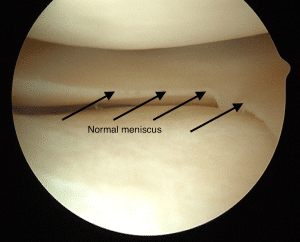
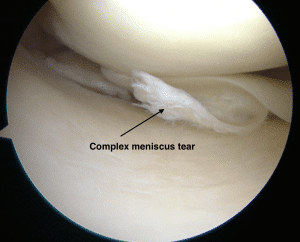
What Causes a Meniscus Tear?
Most commonly, meniscus injuries happen during sports and other physical activities. Surprisingly, they can also occur as the result of minor movements, especially in those who are older in age.
Below are the most common causes for a meniscus tear:
- Changing directions suddenly
- Twisting the knee suddenly
- Playing sports, especially those involving sudden direction changes
- Lifting weights
What Are the Symptoms of a Meniscus Tear?
Symptoms of a meniscus tear that may warrant a visit to Specialty Orthopaedics include the following:
- Pain in the side or center of the knee
- Recurring knee pain/pain that comes and goes
- Clicking feeling or sound in the knee
- Knee stiffness
- Immobility/inability to walk
- Inability to straighten the knee
- Knee instability or “knee giving out”
How is a meniscus tear diagnosed?
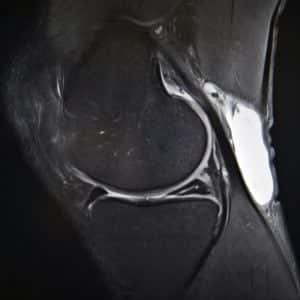
Our team has many years of training in treating all kinds of knee injuries, including meniscus tears. You can trust that you’re in excellent hands when it comes to evaluating and diagnosing your knee condition. We make sure to go over any of your relevant medical history as well as discuss your knee concerns thoroughly before making a diagnosis.
We might also conduct an imaging test to further evaluate your condition and get to the bottom of your knee problem. Imaging tests may include:
- X-rays
- MRI scans
- CAT scans
How Is a Meniscus Tear Treated?
Meniscus injuries are sometimes treated with conservative options, including:
- Rest
- Ice
- Elevation
- Compression
- Strength exercises
- Physical therapy
When Should I See a Doctor for a Possible Meniscus Tear?
Small meniscus tears may not even be felt. When someone says they have torn cartilage in their knee, this usually means a torn meniscus. The question of whether to see experts such as the team at Specialty Orthopaedics comes down to pain and motion.
If you think you may have torn your meniscus, such as during a tennis match, as long as you don’t have locking, the first path of treatment should be RICE: rest, ice, compression, and elevation. This may allow your injury to heal.
This is especially true with the outer third of the meniscus, which receives a rich supply of blood. Tears in this area can heal on their own or with surgery. Tears in the inner two-thirds of the meniscus, however, cannot heal. This is because this area does not have a significant blood supply.
So, when is it time to come see us?
- If your knee is painful and swelling does not decrease
- If your knee locks in certain positions
- If you cannot make any of your usual movements with your knee
If you experience those symptoms, you should schedule an appointment at Specialty Orthopaedics to have our team of board-certified orthopaedic surgeons check out your knee.
What Happens if a Meniscus Tear Is Left Untreated?

If you feel you may have torn your meniscus, there is no reason not to have it checked out. There is a chance a tear on the outer side of the meniscus can heal, but tears on the larger inner portion won’t heal. You can try RICE therapy (that is what we will likely start with as treatment at Specialty Orthopaedics).
But a torn meniscus can often occur along with a tear of your anterior cruciate ligament. This often happens when your injury occurred during a sport or with sudden, strong movement. If you’ve torn a ligament along with your meniscus, your knee stability is compromised and you’re now inviting possible larger damage and injury.
Plus, part of your torn meniscus can break off and become lodged in the knee joint itself. Now you’re looking at a broader scope of surgical repair.
When Is Arthroscopic Knee Surgery Necessary for a Torn Meniscus?
If conservative RICE practices and subsequent physical therapy to strengthen the surrounding muscles that support your knee have not alleviated your knee pain, or if your knee locks, it is likely time to pursue arthroscopic knee surgery.
If the tear can’t be repaired, the torn area can be trimmed away so that it no longer catches on surrounding bone and tissue when you move your knee.
These are minimally invasive procedures, and they can dramatically improve your knee function and reduce pain.
What Are the Risks Associated With Arthroscopic Knee Surgery?
Because our Specialty Orthopaedics surgeons enter through very small incisions, arthroscopic surgery is much safer and has less potential for complications than open procedures. Plus, recovery pain and healing time are much less.
The overall risk of complications associated with knee arthroscopy is estimated to be around 5%. Serious complications have less than a 1% likelihood.
These are the most common risks with these procedures:
- Swelling: Swelling may persist even after surgery.
- Stiffness: Stiffness in the knee can be the result of scar tissue formation.
- Progression of cartilage damage: If a patient has arthritis, there can be a more rapid progression of the condition and of cartilage damage.
- Infection: This is a very unusual complication of knee arthroscopy, but it can occur (less than 0.4% of the time).
- Blood clots: Blood clots can form in the deep veins of the legs. This is increased in patients with blood disorders or genetic conditions. For most patients, the risk is very low, and typically only a problem if the patient is not following our instructions on movement and physical therapy after their procedure.
How Long Does It Take to Recover and Heal After Arthroscopy for a Torn Meniscus?
There is variability here depending on how we addressed your meniscus damage. If we simply shaved away some torn pieces of cartilage, that would be an easier recovery than if we sutured a tear back together.
Most patients can expect their recovery and healing to take about one month. But this can extend with larger repairs to up to three months.
VIDEO: Knee Arthroscopy for Meniscal Repair
Please explore our meniscus repair video below.
Why Choose Specialty Orthopaedics?
Patients trust Specialty Orthopaedics for evidence-based care rooted in a conservative treatment philosophy.
One of our leading providers, Dr. Yasmin Dhar, has specialized expertise in sports medicine and arthroscopic surgery. As a board-certified orthopaedic surgeon and the Chief of Sports Medicine at Montefiore New Rochelle Hospital, Dr. Dhar focuses on the prevention, diagnosis, and treatment of ligament injuries, rotator cuff tears, and meniscal damage, including complex cartilage restoration procedures. With her experience treating athletes of all ages and levels, Dr. Dhar blends advanced training with a personal understanding of the physical demands of an active lifestyle.
Our practice uses advanced technologies like minimally invasive surgery, robotic-assisted joint replacement, and computer-assisted procedures to support more precise results. We develop every treatment plan with consideration of your health, lifestyle, and personal goals.
Frequently Asked Questions
[ma-faq id=”3764″ title_tag=”h3″]
Schedule a Consultation
If you are experiencing symptoms of a meniscus tear, visit Specialty Orthopaedics. Our New York orthopedic practice is home to a team of fellowship-trained orthopedists in a variety of orthopedic specialty areas. We offer comprehensive treatment for musculoskeletal disorders in a caring and responsive clinical atmosphere. Call us at 914-686-0111 or fill out the form on this page to schedule your appointment today.
Our Specialists

Request an Appointment
Awards & Distinctions